Home › Asphalt Pathways, Sidewalks, and Trails
Connect your site with smooth asphalt pathway paving in Garland, TX. We build walkways, bike paths, and multi-use trails for parks, schools, and commercial campuses. Our team handles layout, grading, and paving to create comfortable, accessible routes for pedestrians and cyclists.
Precision Asphalt Garland provides professional asphalt pathway paving throughout Garland, TX, Texas and the surrounding area. Our licensed, insured crew delivers safe, clean, on-time work with a free estimate before anything begins. Call (469) 949-1928 or request your free quote.
Durable Asphalt Pathways for Garland Neighborhoods and Parks
Asphalt pathway paving is one of the most cost-effective ways to connect the places people actually walk in Garland. At Precision Asphalt Garland, we focus on pathways, sidewalks, and trails that hold up to Texas heat, neighborhood foot traffic, strollers, bikes, and the occasional service vehicle.
We work on HOA walking paths, school routes, church campuses, city park trails, and private commercial walkways. Before we quote anything, we walk the property with you, look at where water currently flows, identify trip hazards, and talk through how people really use the space. A trail that serves joggers around Duck Creek Park needs different design choices than a narrow pathway beside a Garland strip center or medical office.
Because we live and work here in Garland, we know how the black clay soils move with moisture and how that can crack a poorly built pathway. Our crews design the base and drainage around those conditions so your new asphalt walk does not settle, rut, or heave after the first few rainy seasons.
Planning and Design: Width, Use, and Drainage
Every successful asphalt pathway project starts with careful planning. During the initial visit, we measure proposed layout, note existing slopes, and ask who will actually be using the path. A simple pedestrian sidewalk along a small office is often 4 to 5 feet wide. A shared-use trail that will see bicycles, joggers, and maintenance carts might be 8 to 12 feet wide with reinforced edges.
We also look for low spots where water already stands after a Garland thunderstorm. Standing water is one of the fastest ways to break down asphalt. Where needed, we design in gentle cross slopes (usually around 2 percent) so water sheds to one side, and we may add shallow swales, trench drains, or rock-lined outlets to keep the path dry.
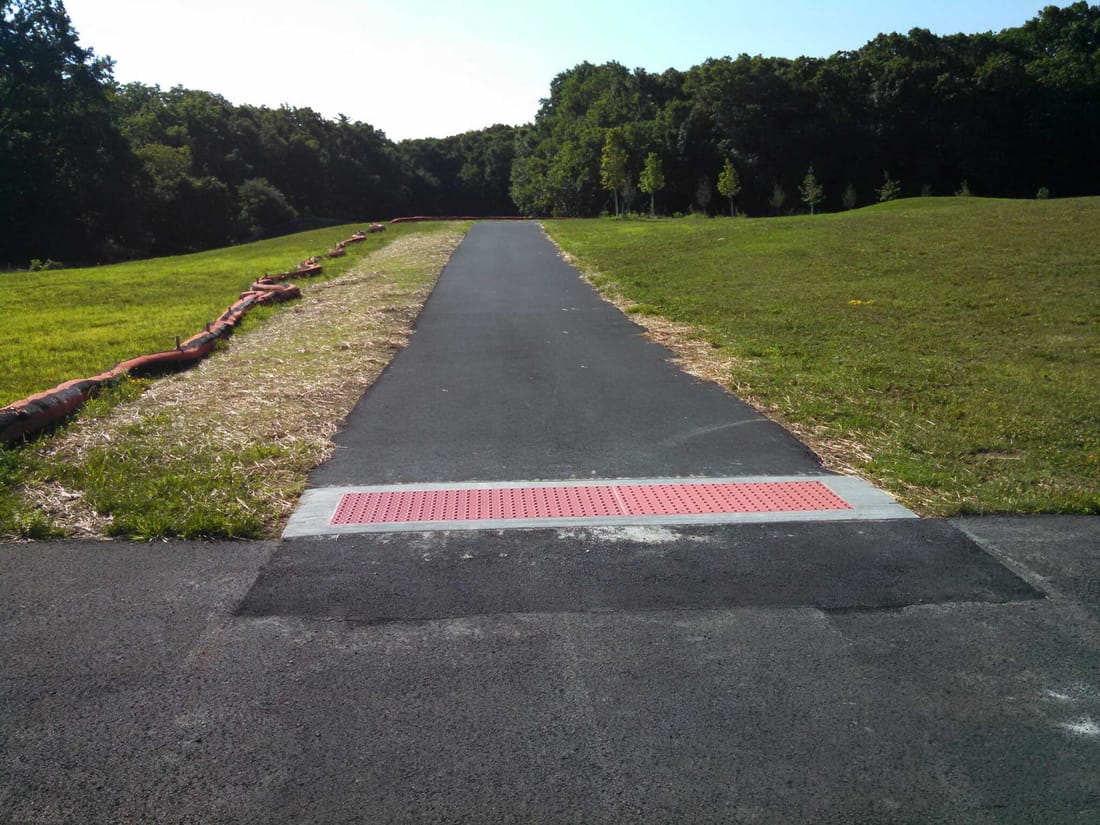
If the pathway will tie into city sidewalks or cross public right of way, we help you understand when ADA ramps, detectable warning panels, or specific cross slopes may be required. For many commercial sites and churches in Garland, we coordinate with your engineer or property manager to make sure the new asphalt pathway paving lines up perfectly with existing concrete entrances, parking lots, or playgrounds without creating a lip or trip hazard.
Site Preparation and Base Work That Survives Texas Soil
In North Texas, the base under your pathway matters more than the surface you see. Precision Asphalt Garland starts by clearing grass, roots, old asphalt, or broken concrete to reach stable subgrade. We then proof-roll the area with a loaded vehicle or roller. Soft spots that pump or flex indicate subgrade that must be removed and replaced so the new trail will not sink.
For most Garland pathways and trails, we install a compacted base of crushed limestone or recycled concrete aggregate, usually 4 to 8 inches thick depending on expected traffic. Heavier service vehicles, such as maintenance carts or small trucks, call for a thicker base than a simple footpath. Each lift of base is compacted with a vibratory roller to achieve a firm, unyielding surface.
On sloped sites or near creek banks around places like Duck Creek or near Rowlett Creek, we may add geotextile fabric between the soil and base stone to keep the materials from mixing and to help with stability. For pathways that run close to irrigation or landscaping, we work with you or your landscaper to locate sprinkler lines before excavation so nothing important gets broken during prep.
Asphalt Mix Options and Installation for Pathways, Sidewalks, and Trails
Once the base is complete, we pave with a hot mix asphalt designed for light vehicular and pedestrian use. Typical pathway thickness ranges from 2 to 3 inches of compacted asphalt. Narrow garden paths and interior campus walks may be on the thinner side, while multi-purpose trails that occasionally carry maintenance trucks may need thicker asphalt to avoid rutting.
We schedule paving for dry weather, which is especially important in Garland where afternoon storms can pop up quickly in spring and summer. Our plant-mixed asphalt arrives hot in insulated trucks, then is placed with a small paver or, on very tight sites, spread and graded by hand. We use as small a machine as practical so we can follow curves and landscape beds cleanly without tearing up your property.
Immediately after placement, our crew compacts the asphalt using the right combination of steel drum rollers and smaller compactors near edges. Proper compaction is what locks the aggregate together and makes the surface dense and smooth. We pay particular attention to transitions where the new asphalt meets existing concrete, such as city sidewalks, curbs, or building entrances, so that wheelchairs, strollers, and bikes can move smoothly without catching a raised edge.
Edges, Finishing Details, and Safety Features
Pathway edges are where many projects fail, especially in lawns and landscaped areas. At Precision Asphalt Garland, we treat edges as a key part of the build. On trails through turf areas, we may recommend a slight shoulder of compacted base material beyond the asphalt to support the sides and prevent edge cracking when mowers or carts run nearby. In high visibility or decorative areas, we can work with your contractor to add concrete or steel edging, or blend mulch beds right up to the path for a clean look.
Where pathways intersect drive lanes or parking lots, we can add striping to highlight the crossing or install reflective markers for nighttime visibility. On longer trails, we help owners plan for mile markers, benches, or bollards to limit vehicle access. For schools, churches, and multifamily communities in Garland, we often coordinate with lighting contractors so conduit and bases are in place before paving starts.
For sloped segments, we review slip resistance, resting areas, and handrail needs where applicable. While asphalt naturally provides good traction, we can adjust the surface texture by using different rolling techniques in high traffic or shaded areas that may stay damp longer.
Cost Factors and Maintenance Expectations in Garland, TX
Asphalt pathway paving costs in Garland are driven by a few key factors: total square footage, thickness of base and asphalt, site access, and how much grading or drainage correction is required. Curved, tree-lined routes that weave through existing landscaping usually require more handwork and edge care than straight runs beside a parking lot, which can affect price.
We provide itemized estimates that separate base work, asphalt paving, and any extras, such as drainage structures, striping, or tie-ins to existing sidewalks. This helps property managers, HOAs, and small businesses in Garland understand where their money is going and where there might be options to adjust scope to match a budget without sacrificing core quality.
Once installed, asphalt pathways are relatively simple to maintain. We typically recommend sealcoating every 3 to 5 years for high sun exposure areas to protect from UV and light oil spills, and crack filling as soon as small gaps appear. In our Garland climate, quick attention to early cracks is important because clay soil movement and heavy rains can turn a small crack into a pothole in a short time. As part of our service, we can set up a simple inspection schedule so your pathways stay safe and attractive without surprise repair bills.
Local Experience, Permitting, and How to Get Started
Working in Garland means understanding local expectations. For pathways on private property that do not connect to city sidewalks, formal permits are often minimal, but if your new trail crosses into the public right of way, modifies an ADA route, or ties directly into city infrastructure, we can help you coordinate with the City of Garland Building Inspection and Engineering departments when needed. We routinely work under HOA guidelines, property management rules, and insurance requirements, and can supply certificates of insurance and detailed scopes to satisfy boards and risk managers.
Precision Asphalt Garland keeps communication simple. We start with a site meeting, then provide a written proposal with a clear drawing or description of the pathway layout, thicknesses, and any special details. Before work begins, we confirm schedule, access, and staging so residents, tenants, or visitors know what to expect. On multi-phase projects, such as long greenbelt trails, we can break work into logical sections so parts of the path stay open while others are being built.
If you are considering new asphalt pathways, sidewalks, or trails anywhere in Garland, TX, collecting a few photos of the area, a rough sketch, or an existing site plan is a great first step. Share those with us, and we will walk you through design options, realistic costs, and a schedule that fits our often hot and sometimes stormy North Texas weather so your new pathways are built to last.