Home › Industrial and Heavy-Duty Asphalt Paving
Handle heavy loads with confidence using industrial asphalt paving in Garland, TX. We design and build thick, reinforced asphalt sections for truck yards, loading docks, and warehouse drives. Our team selects the right mix designs and base depths so your pavement can stand up to constant turning and heavy axle loads.
Precision Asphalt Garland provides professional industrial asphalt paving throughout Garland, TX, Texas and the surrounding area. Our licensed, insured crew delivers safe, clean, on-time work with a free estimate before anything begins. Call (469) 949-1928 or request your free quote.

Industrial Asphalt Paving Built for Heavy Loads in Garland
Industrial and heavy-duty asphalt paving is not the same as paving a driveway or small parking lot. At Precision Asphalt Garland, we design pavements specifically for 18‑wheelers, forklifts, loaded dumpsters, and continuous industrial traffic common around Garland manufacturing plants, warehouses, and distribution centers.
Our team starts every industrial asphalt paving project with a detailed site review. We look at how trucks enter and exit, where they queue, turning radiuses, dock locations, and any areas where trailers are dropped or stored. Those high stress zones require thicker asphalt sections and a stronger base than standard commercial paving. We also account for Garland soil conditions, drainage patterns, nearby drainage ditches, and city requirements so the pavement holds up under both heavy weight and North Texas weather swings.
If you manage a facility in Garland, you need an asphalt design that matches your actual traffic, not a generic square footage price. We engineer each section of your pavement so it can handle real-world use without rutting, shoving, or premature cracking.
How We Design Heavy-Duty Asphalt Pavements
Proper design is what separates industrial asphalt paving from basic parking lots. Precision Asphalt Garland follows industry-accepted pavement engineering practices, adjusted for Garland area traffic and soil conditions.
We start by classifying your traffic loads: number of trucks per day, axle loads, turning areas, and any static loads like loaded containers or material storage. For example, a cold storage warehouse with constant reefer trailer traffic and tight dock maneuvers needs a different section design than a light manufacturing facility with occasional deliveries.
Next, we determine the asphalt layer thicknesses. Industrial applications often require 3 to 5 inches of asphalt over a 6 to 10 inch base, and in some cases thicker. In the heaviest loading zones, such as dumpster pads or fuel delivery areas, we may recommend reinforcing the pavement with concrete pads or thicker asphalt with a high stability mix.
We also use heavier duty asphalt mixes containing more stone and modified binders where warranted. These mixes are more resistant to rutting and shoving, which is critical in hot Garland summers when pavement is softer under extreme temperatures. The final design balances performance, cost, and maintenance expectations over a 15 to 25 year life cycle.
Step-by-Step: Our Industrial Asphalt Paving Process
For industrial and heavy-duty asphalt paving, process and quality control are just as important as design. Precision Asphalt Garland follows a structured workflow so your plant or yard gets a pavement system that performs under load.
1. Site evaluation and coring. We perform visual inspection and, when appropriate, core sampling of existing pavement to see what is underneath. This helps us decide how much of the existing structure can be reused and where full-depth reconstruction is required.
2. Demolition and subgrade preparation. We remove failing pavement, soft spots, and unsuitable soils. In Garland, expansive clay soils are common, so we often proof-roll the area with loaded equipment to identify weak zones, then undercut and replace those areas with better material or stabilize them.
3. Base installation and compaction. For heavy-duty applications, we typically install a crushed limestone or recycled concrete base, then compact it to a specified density using vibratory rollers. Proper base thickness and compaction are critical to prevent future settlement. We also shape the base to achieve correct drainage.
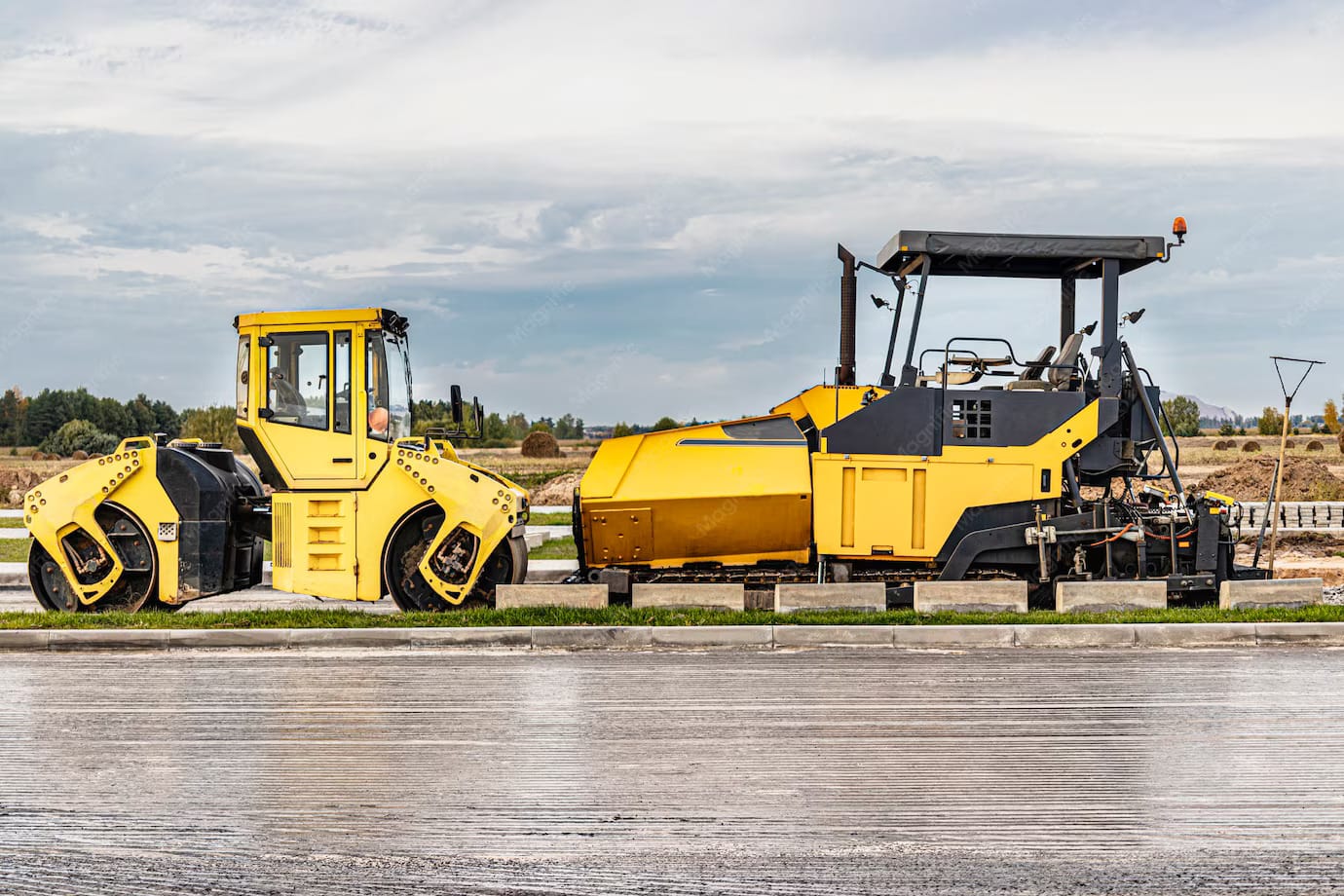
4. Asphalt placement in multiple lifts. Instead of placing all the asphalt at once, we install it in two or more layers (lifts). Each lift is spread with a paver, then compacted with steel and pneumatic rollers to achieve the required density. Multi-lift construction improves strength and reduces the risk of segregation or weak spots.
5. Transitions and tie-ins. We carefully tie the new pavement into existing concrete docks, streets, and approaches so there are no abrupt bumps that can damage forklift loads or truck suspensions.
6. Final checks and striping. After compaction, we verify smoothness and drainage, then apply striping, truck routes, and safety markings if requested so your operations can restart with clear traffic control.
Material Options for High-Performance Industrial Asphalt
Not all asphalt mixes are suitable for heavy-duty industrial use. Precision Asphalt Garland selects or designs mixes that match your facility conditions, maintenance strategy, and budget.
Heavy-duty surface courses typically use a higher percentage of coarse aggregate for strength and rut resistance. In very high load or high temperature environments, we may recommend polymer-modified asphalt binders, which hold their structure better during Garland’s 100-plus degree days.
In some industrial yards, especially where steel-tracked equipment operates or where there is constant twisting and turning of forklifts, we consider dense graded mixes that resist shearing. In loading docks with fuel or oil exposure, we discuss options for surface sealers or, in some cases, concrete inserts in the highest risk spots to protect the asphalt around them.
For clients looking to balance performance and sustainability, we can incorporate reclaimed asphalt pavement (RAP) in base or intermediate layers while keeping the surface mix optimized for durability. We walk you through where recycled material is appropriate and where it is not, based on the performance you expect from the pavement.
What Drives Cost in Industrial Asphalt Paving
Industrial asphalt paving costs are determined by more than just square footage. Precision Asphalt Garland explains the cost drivers up front so you can budget accurately and compare bids fairly.
Key factors include:
• Load and use requirements. Areas designed for heavy truck traffic, storage of loaded trailers, or container stacking require thicker sections and stronger mixes than light-duty parking, which increases material and labor costs.
• Existing conditions. If your current yard has deep failures, drainage issues, or soft subgrade, there will be more excavation, base replacement, or soil stabilization. On the other hand, a structurally sound base that only needs resurfacing can reduce costs.
• Phasing and access. Keeping operations running while paving may require night work, weekend work, or phased construction with temporary traffic control. These logistics can influence labor and equipment costs but often save you money by reducing production downtime.
• Drainage and grading needs. Adding or adjusting inlets, regrading for better runoff, and correcting ponding areas all add upfront cost but significantly reduce long-term pavement damage and safety issues.
We provide detailed proposals that break down these elements, rather than a single lump number, so you understand exactly what you are paying for and where design decisions affect cost.
Scheduling Around Garland Weather and Operations
In Garland, timing your industrial asphalt paving project correctly affects quality and how much disruption you experience. Precision Asphalt Garland schedules work to align with both climate and your production cycles.
The best paving windows are typically from late spring through early fall, when temperatures support proper asphalt compaction and curing. Very cold mornings or sudden fronts can make compaction more difficult and reduce initial density. During peak summer heat, we adjust paving times and compaction methods so the mat is compacted while workable but not tender.
For industrial facilities, we coordinate closely with your operations team. We plan work around shipping peaks, inventory counts, or seasonal shut-downs where possible. Where that is not feasible, we phase projects so that trucks always have a safe, signed route and dock access. This may include temporary rock access, staged openings of finished sections, or weekend tie-ins at critical plant entrances.
We also monitor local forecasts carefully. If a strong Gulf moisture event or severe storm system is expected, we adjust start dates and pour times to avoid surface damage or base saturation so your pavement performance is not compromised by rushed work.
Choosing Precision Asphalt Garland for Heavy-Duty Work
Industrial and heavy-duty asphalt paving is long-term infrastructure for your business, not a short-term cosmetic upgrade. Precision Asphalt Garland focuses on structural integrity, traffic flow, and life-cycle cost so the pavement supports your operations instead of interrupting them.
We combine field-tested construction practices with local Garland experience to recommend solutions that match your actual use: reinforced truck lanes where rigs queue, thicker pavement in dumpster and compactor zones, and appropriate surface mixes where forklifts or pallet jacks turn all day.
Before any work begins, we walk the site with you, discuss your loading patterns and operational priorities, and present a clear scope that explains thicknesses, materials, phasing, and maintenance considerations. After completion, we explain how to protect your investment with routine inspections, crack sealing, and, when appropriate, sealcoating schedules tailored to heavy-duty surfaces.
If you are planning a new facility, expanding a yard, or replacing a failing industrial pavement in Garland, Precision Asphalt Garland can provide engineered designs, cost options, and construction that align with both your budget and your operational demands.